Waterproof Endoscope Camera Explained: A UK Buyer's Guide
TL;DR: A waterproof endoscope camera is a specialised, flexible diagnostic tool equipped with a sealed lens (typically rated IP67 or IP68) designed to capture live, high-definition video inside wet, submerged, or damp environments. Based on our rigorous testing at Endoscope Hub, these devices are essential for safely inspecting blocked UK plumbing, investigating wet automotive engine bays, and surveying damp cavity walls without the need for destructive dismantling.
Consequently, diagnosing a coolant leak in a cramped engine bay or locating a blockage in a submerged drainage pipe can quickly turn into a costly, time-consuming nightmare. For mechanics, plumbers, and DIY enthusiasts navigating the uniquely damp conditions of the UK, a standard inspection tool simply will not suffice. Therefore, you need equipment capable of withstanding moisture, oil, and complete submersion without compromising on image clarity.
Ultimately, a waterproof endoscope camera is an indispensable tool for these exact scenarios. By combining robust ingress protection with high-definition optics and smartphone connectivity, these devices allow you to see into the darkest, wettest crevices of machinery and infrastructure. In this comprehensive guide, we will explore what makes an endoscope truly waterproof, the essential features to look out for, and how to choose the right model for your specific needs based on our in-house technical evaluations.
Key Takeaways
- IP Ratings Matter: Look for at least an IP67 rating for temporary submersion, or IP68 for continuous underwater use.
- Versatile Applications: Ideal for automotive cooling systems, blocked household plumbing, and inspecting damp wall cavities.
- Essential Features: Steerable 360° vision and adjustable LED lighting are crucial for navigating murky, submerged environments.
- Smart Connectivity: Modern waterproof scopes connect directly to your smartphone, eliminating the need for bulky, separate monitors.
What is a Waterproof Endoscope Camera?
Unlike medical endoscopes used within the NHS for internal bodily examinations, an industrial waterproof endoscope camera (often referred to as a borescope or inspection camera) is specifically engineered for mechanical, automotive, and structural diagnostics. Specifically, it consists of a flexible or semi-rigid cable tipped with a miniature camera and LED lights, all sealed tightly against liquid ingress.
Furthermore, these devices are designed to snake through narrow, dark, and wet passages—such as a vehicle's cooling system or a household U-bend—transmitting a live video feed back to a screen. Modern iterations have largely abandoned the heavy, integrated screens of the past. Instead, they utilise the high-resolution displays we already carry in our pockets. For a deeper dive into how this technology integrates with your mobile device, read our Ultimate Guide to Smartphone Endoscope Camera in the UK.
How Do I Know if an Endoscope Camera is Truly Waterproof?
When shopping for a waterproof endoscope camera in the UK, the term "waterproof" can be frustratingly vague. To ensure you are purchasing a tool fit for purpose, you must look at the Ingress Protection (IP) rating. This two-digit standard, defined by the International Electrotechnical Commission (IEC), dictates exactly how much dust and water a device can withstand.
What is the Difference Between IP67 and IP68 Endoscopes?
The first digit represents protection against solid objects (like dust), while the second digit represents protection against liquids. Consequently, for an inspection camera to be considered truly waterproof, you should only consider devices with a second digit of 7 or 8. Based on our testing at Endoscope Hub, here is how they compare:
- IP67 Rating: The device is 100% protected against dust (the '6') and can be dropped into a body of water up to a metre deep for up to 30 minutes (the '7'). This is the standard for most high-quality waterproof inspection cameras and is perfectly adequate for checking U-bends, automotive fluids, and damp wall cavities.
- IP68 Rating: The device is dust-tight and can withstand continuous submersion in water deeper than one metre. If you are a professional plumber frequently inspecting deep, flooded sewer lines, an IP68-rated snake inspection camera is highly recommended by industry professionals.
"According to Water UK, water companies deal with around 300,000 sewer blockages every year across the country. Efficient diagnosis using waterproof inspection tools is critical to preventing these blockages from causing severe property damage."
What Can You Use a Waterproof Endoscope Camera For in the UK?
The British climate and our older housing stock present unique challenges that make a waterproof endoscope camera an essential addition to any toolkit. Here is how professionals and homeowners are effectively utilising this technology.
Can You Use an Endoscope to Inspect Automotive Engine Bays?
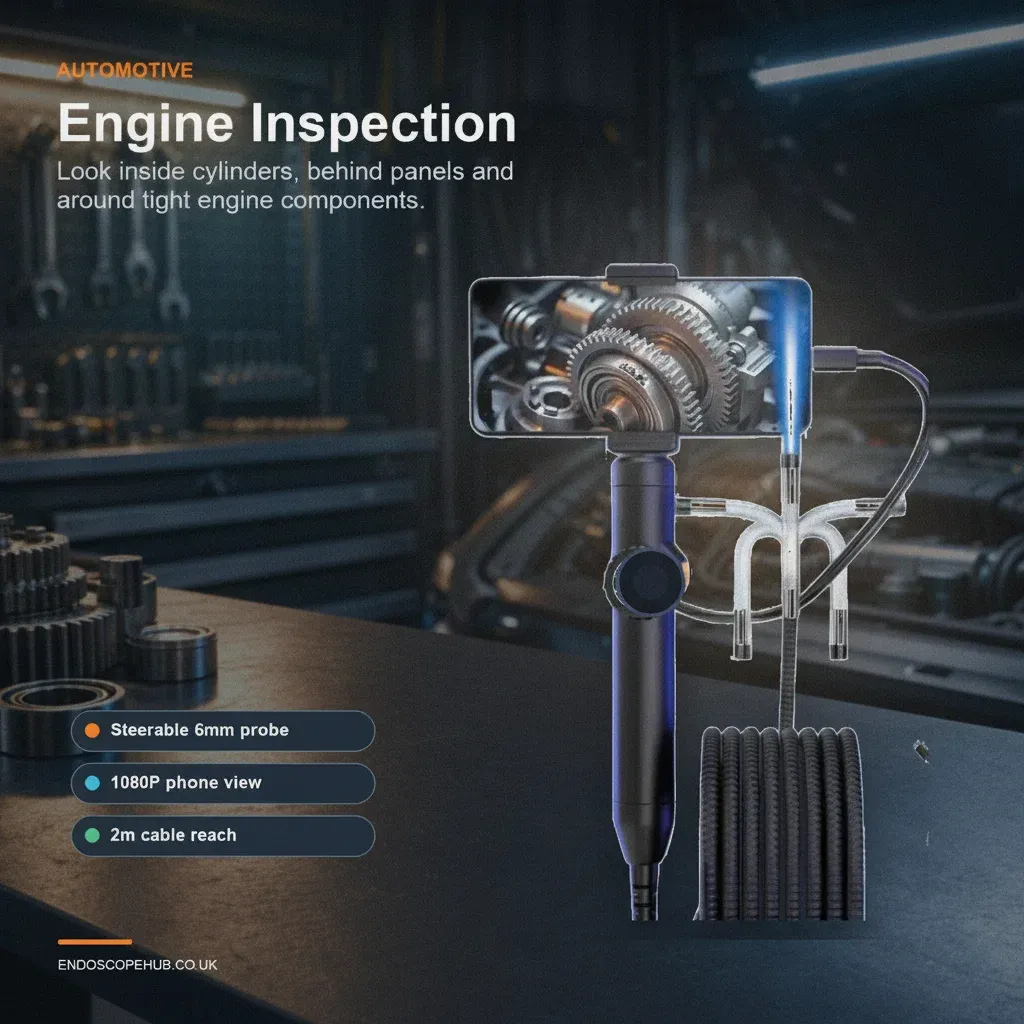
Modern vehicle engine bays are notoriously tightly packed. Diagnosing issues within the cooling system, checking for blown head gaskets, or inspecting the bottom of a wet sump requires a camera that will not short-circuit the moment it touches coolant or oil. A waterproof endoscope allows mechanics to visually inspect the water pump or radiator internals without requiring a complete teardown. Moreover, the steerable 360° vision found on premium models is particularly vital here, allowing you to look back at the valves or navigate around tight corners within the engine block.
Are Waterproof Cameras Suitable for UK Plumbing and Pipework?
Whether it is a blocked sink in a London flat or a slow-draining exterior pipe in a rural cottage, plumbing diagnostics inherently involve water. Pushing a non-waterproof camera down a drain is a guaranteed way to destroy your equipment. Conversely, a waterproof probe can safely navigate through standing water, identifying fatbergs, tree root intrusions, or collapsed pipework. The built-in LED lights illuminate the murky water, giving plumbers the exact location and nature of the blockage.
How Do Surveyors Inspect Cavity Walls and Damp?
Damp is a persistent issue in UK properties, often exacerbated by driving rain and fluctuating temperatures. According to UK building surveyors, waterproof endoscopes are heavily relied upon to inspect cavity walls for compromised insulation, bridged damp-proof courses, or hidden leaks behind plasterboard. Because these environments are often wet and grimy, a camera with a high IP rating ensures reliable performance without the lens fogging up or the internal electronics corroding.
What Features Should I Look For in the Best Waterproof Endoscope Camera?
Not all waterproof cameras are created equal. Based on our extensive product evaluations, to ensure you get the best performance in challenging environments, you should look for the following specifications:
1. Steerable 360° Vision (Articulation)
A rigid, forward-facing camera is of limited use when you need to inspect the sidewalls of a pipe or the underside of a valve. Articulating endoscopes feature a tiny mechanical joint at the tip, controlled by a joystick or dial on the handle. Consequently, this steerable 360° vision allows you to pan and tilt the camera head while it is submerged, providing a comprehensive view of the inspection area.
2. Probe Diameter
The size of the camera head dictates where the tool can go. If you are inspecting diesel injectors or tiny structural gaps, a smaller probe is essential. A 6mm borescope camera offers an excellent balance of manoeuvrability and high-definition image quality for these exacting tasks.
Ready to upgrade your diagnostics with Endoscope Hub?
Shop Now — £78.11