The Ultimate Guide to Smartphone Endoscope Camera in the UK
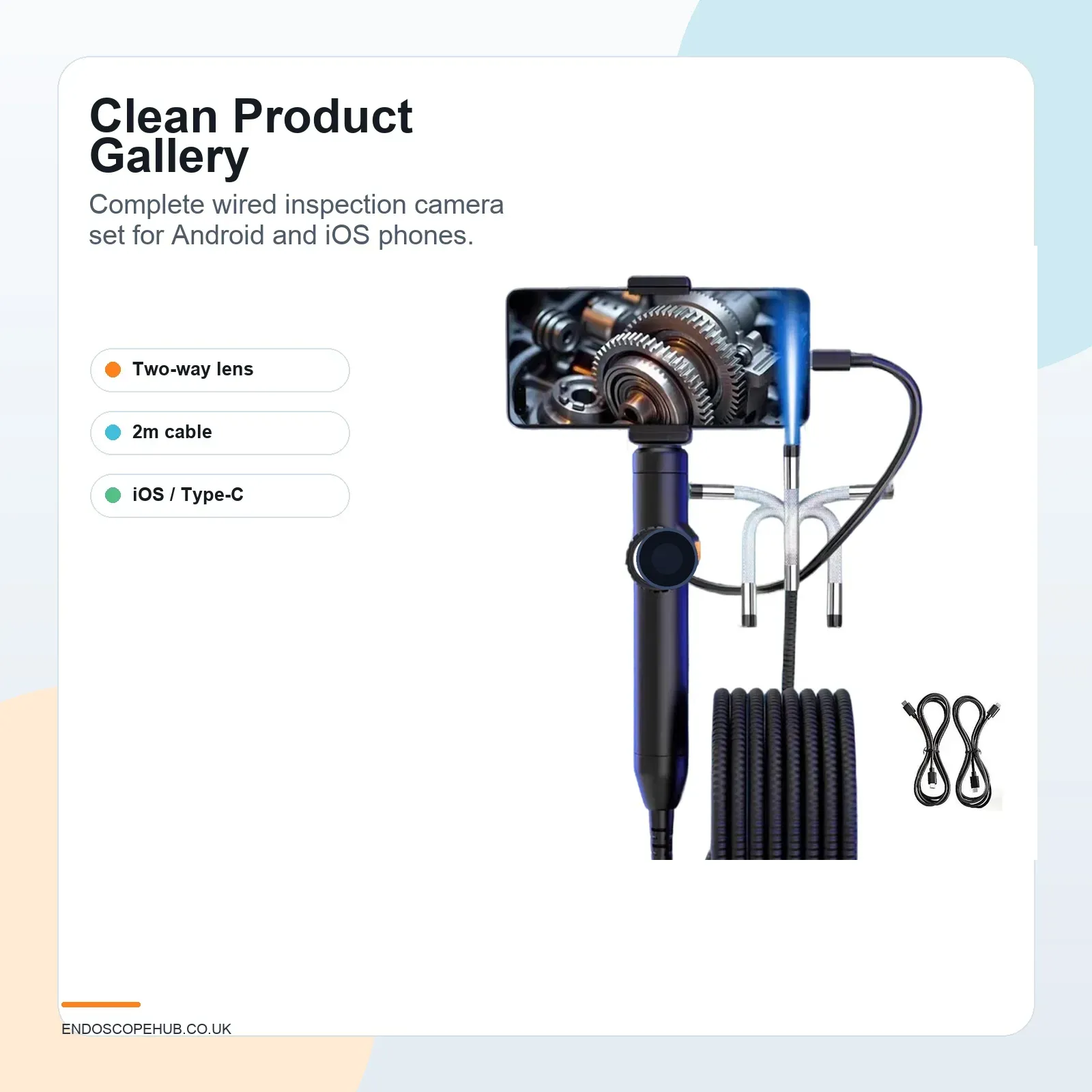
If you are searching for a smartphone endoscope camera, the short answer is this: it is a slim inspection camera that connects to your phone so you can see inside engines, pipes, wall cavities and other hard-to-reach spaces without dismantling everything first. For UK tradespeople and DIY users alike, it is one of the quickest ways to diagnose faults, confirm blockages and inspect hidden areas safely and efficiently.
TL;DR: A smartphone endoscope camera lets you turn your mobile into a live inspection screen for checking drains, engine bays, cavities and confined spaces. Based on our testing at Endoscope Hub, the best models for UK users combine a small probe diameter, bright adjustable LEDs, reliable Android or iPhone compatibility, and enough cable length for real jobs rather than quick demonstrations.
Key takeaways
- A smartphone endoscope camera helps you inspect hidden spaces without unnecessary dismantling.
- It is especially useful for mechanics, plumbers, electricians, builders and serious DIY users in the UK.
- The most important features are compatibility, probe diameter, camera quality, lighting, cable length and waterproof rating.
- For automotive work, a smaller probe and strong image clarity matter most; for drains and pipework, waterproofing and cable reach matter more.
- Based on our testing, app stability and connection reliability are just as important as advertised resolution.
- According to UK safety guidance, inspection tools should support diagnosis only and should not replace safe isolation, confined-space procedures or proper access controls.
What is a smartphone endoscope camera?
A smartphone endoscope camera is a compact inspection camera attached to a flexible or semi-rigid cable that connects to a mobile phone or tablet. It sends a live video feed to your device, allowing you to look inside spaces that would otherwise be difficult, expensive or time-consuming to access.
In practical terms, that means you can inspect behind appliances, inside pipe runs, under floorboards, within engine components, or through small access points in walls and ceilings. As a result, a smartphone endoscope camera can save time on fault-finding and help you decide whether further dismantling is actually necessary.
At Endoscope Hub, we see these cameras used most often by UK mechanics checking engine wear or carbon build-up, plumbers tracing obstructions in pipework, and property professionals inspecting cavities, voids and hidden moisture-prone areas.
How does a smartphone endoscope camera work?
A smartphone endoscope camera works by using a tiny camera module mounted at the end of a narrow cable. Once connected to your phone, the camera transmits a live image to an app or directly to the device, depending on the model. Many units also include built-in LED lights so the camera can illuminate dark spaces while you inspect them.
There are several common connection types in the UK market:
- USB-C endoscope cameras for many newer Android phones and tablets
- Micro-USB models for older Android devices
- Lightning-compatible or Wi-Fi models for iPhone and iPad users
- Dual-connector units designed to cover more than one device type
However, compatibility is not only about the plug. The app experience, software permissions and operating system support can make a significant difference. Based on our testing, many budget models look similar on paper but vary greatly in connection stability and image lag.
What is a smartphone endoscope camera used for?
A smartphone endoscope camera is used for non-destructive visual inspection. In other words, it helps you look first and take things apart second. Therefore, it is valuable wherever visibility is limited and access is restricted.
Automotive inspections
Mechanics and car owners often use a smartphone endoscope camera to inspect:
- Engine cylinders
- Glow plug and spark plug openings
- Intake manifolds
- Behind dashboards
- Rust-prone chassis areas
- HVAC vents and inaccessible trim spaces
For example, during fault diagnosis, an endoscope can help identify carbon build-up, fluid contamination, foreign objects or corrosion before more invasive work begins.
Plumbing and drains
For plumbers, maintenance engineers and landlords, these cameras are regularly used to inspect:
- Small-bore pipework
- Waste pipes
- Under-sink blockages
- Toilet connections
- Wall voids around leaks
- Drain access points where a full drain survey camera is unnecessary
Although a smartphone endoscope camera is not a substitute for a specialist drain survey system on larger jobs, it is often ideal for short-run diagnostic work and preliminary checks.
Property and building maintenance
In UK homes, especially older terraces, flats and period properties, inspection cameras can be helpful for checking:
- Cavity walls
- Loft voids
- Behind kitchen units
- Under bath panels
- Insulation gaps
- Signs of damp, pest activity or debris
Electrical and installation work
Electricians and installers may use them to view trunking, wall cavities, ceiling voids and behind fixed units. Even so, according to UK electrical safety practice, circuits must always be safely isolated before any inspection around electrical systems.
What should you look for when buying a smartphone endoscope camera?
If you want to choose the right smartphone endoscope camera, focus on real-world usability rather than headline specifications alone. Below are the features that matter most.
1. Is it compatible with your phone?
This is the first question to ask because even a very capable inspection camera is useless if it will not connect properly to your device. Check:
- Whether your phone uses USB-C, Lightning or Wi-Fi connectivity
- Whether the app is available in the UK app stores
- Whether your operating system version is supported
- Whether the camera works with tablets as well as phones
Based on our testing, Wi-Fi models are often the simplest option for iPhone users, while direct USB-C models can be more straightforward on Android if the handset supports external camera input properly.
2. What probe diameter do you need?
Probe diameter affects where the camera can go. A smaller diameter is usually better for tight access, but there can be trade-offs in light output or durability.
- 3.9mm to 5.5mm: better for spark plug ports, narrow gaps and precision work
- 5.5mm to 8mm: a common all-round size for domestic and trade inspection
- Above 8mm: usually better suited to larger cavities or heavier-duty applications
Therefore, mechanics often prioritise slim probes, while general property maintenance users may prefer a slightly larger but more robust camera head.
3. Does camera resolution really matter?
Yes, but only up to a point. A smartphone endoscope camera with better image quality makes diagnosis easier, especially when you need to spot cracks, corrosion, residue or moisture. That said, advertised resolution can be misleading if the sensor quality is poor or the app compresses the image heavily.
Based on our testing, a clear, stable image with good close-focus performance is more useful than inflated marketing claims. Good lighting, reliable frame rate and sensible colour balance often matter more than the biggest number on the box.
4. How important are LED lights?
Very important. Most inspection spaces are dark, so adjustable LED lighting is essential. Without it, even a high-resolution sensor will struggle. Look for a camera with brightness control so you can reduce glare from wet pipework, metal surfaces or reflective engine components.
5. Should the cable be flexible or semi-rigid?
A fully flexible cable can snake into awkward spaces, but it may be harder to steer. A semi-rigid cable usually offers better control, which is useful for short-range inspections in engines, cavities and appliances. Consequently, many UK tradespeople prefer semi-rigid designs for general diagnostic work.
6. What cable length is best?
The right length depends on the job:
- 1m to 2m: suitable for engines, appliances and quick household checks
- 3m to 5m: more versatile for plumbing, building maintenance and void inspection
- 10m and above: useful for longer runs, though handling can become more difficult
Longer is not always better. In fact, excessive cable length can make the camera harder to guide accurately.
7. Does waterproofing matter?
Yes, especially for plumbing, outdoor use or damp environments. An IP67-rated smartphone endoscope camera is common and generally suitable for temporary water exposure. However, always check the manufacturer’s guidance before submerging any part of the system, particularly the connector or control module.
8. Are accessories worth having?
Many kits include small attachments such as hooks, magnets and mirrors. These can be useful, although they are often secondary to the camera’s core performance. A magnet may help retrieve a dropped screw, while a hook can help move debris slightly for a better view.
Is a smartphone endoscope camera better than a traditional borescope?
That depends on the job. A smartphone endoscope camera is often more convenient because your phone becomes the display, recording device and sharing tool in one. As a result, it is excellent for quick diagnostics, site visits and creating inspection photos or videos for customers.
On the other hand, dedicated borescopes may offer advantages such as:
- Built-in screens with no app dependency
- Better ruggedness for heavy trade use
- More advanced articulation on premium units
- Less reliance on phone battery life or software compatibility
For many UK users, the smartphone option strikes the best balance between cost, portability and practicality. However, if you need advanced articulation, industrial-level durability or specialist recording features, a standalone borescope may be the better fit.
Can you use a smartphone endoscope camera with iPhone and Android?
Yes, but compatibility varies by model. This is one of the most common questions we hear at Endoscope Hub, and it is worth checking carefully before you buy.
Do smartphone endoscope cameras work with Android phones?
Many do. Android handsets with USB-C often support direct connection, although app quality and device permissions can still vary. Some lower-cost products require specific app settings, and not every handset behaves the same way.
Do smartphone endoscope cameras work with iPhones?
Yes, but iPhone compatibility is often easiest through Wi-Fi-enabled models or products specifically designed for iOS. Generic USB models may not work properly with Apple devices unless they are made for that ecosystem.
Therefore, if you use an iPhone in the UK, it is usually best to choose a clearly labelled iOS-compatible camera rather than assuming all smartphone endoscope cameras are universal.
What are the best uses for a smartphone endoscope camera in the UK?
Because UK housing stock, vehicles and job types vary widely, the best use case often depends on your trade or property type. Still, some applications come up again and again.
For mechanics and garages
- Checking inside cylinders before major engine work
- Inspecting inaccessible areas in the engine bay
- Looking behind trim and dashboard panels
- Confirming the presence of leaks, rust or debris
For plumbers and heating engineers
- Tracing minor blockages
- Inspecting under baths and behind boxed-in pipework
- Checking around concealed leaks
- Viewing short pipe sections before cutting into walls or floors
For builders, surveyors and maintenance teams
- Checking voids before drilling or cutting
- Inspecting cavity walls in older buildings
- Looking for signs of damp or condensation routes
- Assessing inaccessible corners in lofts and service spaces
For homeowners and DIY users
- Retrieving dropped objects
- Investigating slow drains
- Checking behind large appliances
- Inspecting roof voids, floor voids and boxed-in services
Are smartphone endoscope cameras safe to use?
Yes, when used correctly, a smartphone endoscope camera is generally safe for visual inspection. Even so, safe use depends on the environment and the task.
According to UK guidelines and general safe-working practice:
- Do not use inspection cameras as a substitute for electrical isolation procedures
- Do not insert a camera into hazardous confined spaces without proper training and controls
- Do not rely on a camera alone to confirm equipment is safe to touch or dismantle
- Clean and disinfect the probe after use in drains, waste systems or contaminated areas
- Check the waterproof rating before use in wet conditions
In addition, if you are working in rented property, commercial premises or regulated environments, follow the relevant UK health and safety procedures for inspection, access and documentation.
What are the limitations of a smartphone endoscope camera?
Although these devices are extremely useful, they do have limitations. Firstly, they are line-of-sight tools, so they can only show what the lens can physically see. Secondly, image quality may drop in dirty water, steam or heavy debris. Thirdly, many entry-level units do not offer true articulation, which makes navigating complex bends harder.
Other common limitations include:
- App crashes or connection issues on unsupported phones
- Reduced visibility on reflective metal surfaces
- Difficulty judging exact depth or scale from the image alone
- Less durability on very cheap models used daily on site
Therefore, a smartphone endoscope camera works best as a practical first-line diagnostic tool rather than a complete replacement for every specialist inspection system.
How do you get the best results from a smartphone endoscope camera?
To get clearer images and more reliable inspections, a few simple habits make a real difference.
Clean the lens before every use
A tiny smudge can ruin image quality. Therefore, wipe the camera head gently before starting and again if the image becomes hazy.
Adjust the LED brightness
Too much light can create glare, especially in metal pipework or wet spaces. So, reduce brightness until the image looks balanced rather than washed out.
Move slowly
Fast movement makes orientation difficult. Instead, advance the probe gradually and pause often to inspect key areas.
Use reference points
When inspecting an engine, cavity or pipe run, note where the cable enters and roughly how far it has travelled. This helps you identify the location of any issue more accurately.
Record photos and video
If your model supports capture, save the inspection footage. This is useful for customer reports, maintenance records, warranty evidence and follow-up comparisons.
Choose the right tool for the space
A slim probe is not always best, and a longer cable is not always easier. Match the camera to the actual job rather than buying by specification alone.
How do you choose the best smartphone endoscope camera for your needs?
The best choice depends on what you inspect most often.
Best for automotive users
Look for a slim probe, good close-focus clarity, stable image output and a cable that is easy to control around engine components.
Best for plumbing users
Prioritise waterproofing, practical cable length, durable construction and enough light for wet or dark pipe sections.
Best for property maintenance
Choose a versatile diameter, solid app support, a semi-rigid cable and reliable image capture for records and reports.
Best for occasional DIY use
A simpler, affordable model may be enough, provided it is genuinely compatible with your phone and has decent lighting.
At Endoscope Hub, we recommend focusing on dependable performance first. Based on our testing, buyers are usually happier with a camera that connects quickly and produces a clear image every time than one with impressive claims but inconsistent real-world use.
Why trust Endoscope Hub on smartphone endoscope cameras?
At Endoscope Hub, we focus specifically on inspection camera use cases relevant to UK buyers, including automotive diagnostics, domestic plumbing, property maintenance and practical trade applications. Our recommendations are shaped by hands-on product assessment, compatibility checks and the issues customers most commonly report after purchase.
Based on our testing, the biggest differences between models are rarely the flashy specifications. More often, they come down to connection reliability, realistic image quality, handling in tight spaces and whether the product performs properly in day-to-day UK trade conditions.
That practical perspective matters because a smartphone endoscope camera is only useful if it works when you need it, whether you are on a driveway, in a plant room, under a sink or inside a cold loft in January.
Frequently asked questions about smartphone endoscope cameras
What is a smartphone endoscope camera?
A smartphone endoscope camera is a small inspection camera that connects to your phone and shows live video from hard-to-reach areas such as pipes, engines, cavities and appliances.
Are smartphone endoscope cameras worth it?
Yes, for many users they are well worth it because they reduce guesswork and help avoid unnecessary dismantling. They are especially useful for quick diagnostics and visual checks.
Do smartphone endoscope cameras work with iPhones?
Some do, particularly Wi-Fi models or units designed specifically for iOS. Always check compatibility before buying.
Do smartphone endoscope cameras work with Android?
Many do, especially USB-C models. However, support can vary between handsets and apps, so it is important to verify compatibility.
What is the best probe size for a smartphone endoscope camera?
For tight access, 3.9mm to 5.5mm is often ideal. For more general inspection, 5.5mm to 8mm is a common and practical range.
Can a smartphone endoscope camera go in water?
Many camera probes are water-resistant or waterproof, often to IP67 standard, but you should always check the specific rating and keep connectors protected unless stated otherwise.
Can you use a smartphone endoscope camera for drains?
Yes, for short-run checks and minor diagnostic work. For larger drain surveys, a dedicated drain camera system may be more suitable.
Is a smartphone endoscope camera good for car engines?
Yes, it can be very useful for inspecting cylinders, checking for deposits and looking into tight areas around the engine bay with minimal dismantling.
If you are comparing options for automotive, plumbing or property inspection, explore the range at Endoscope Hub to find a smartphone endoscope camera suited to your phone, your trade and the spaces you need to inspect.
Ready to upgrade your diagnostics with Endoscope Hub?
Shop Now — £78.11