Diesel Glow Plug Borescope Probe Size Uk
Direct answer: do not assume a 6mm phone borescope will fit a UK diesel glow-plug hole. Petrol spark-plug access is often more forgiving; diesel glow-plug access can need a slimmer probe, and trade diesel kits are publicly sold with sub-5mm probe sizes. Measure the removed glow plug or the open access before you buy.
The access hole decides before the camera spec does
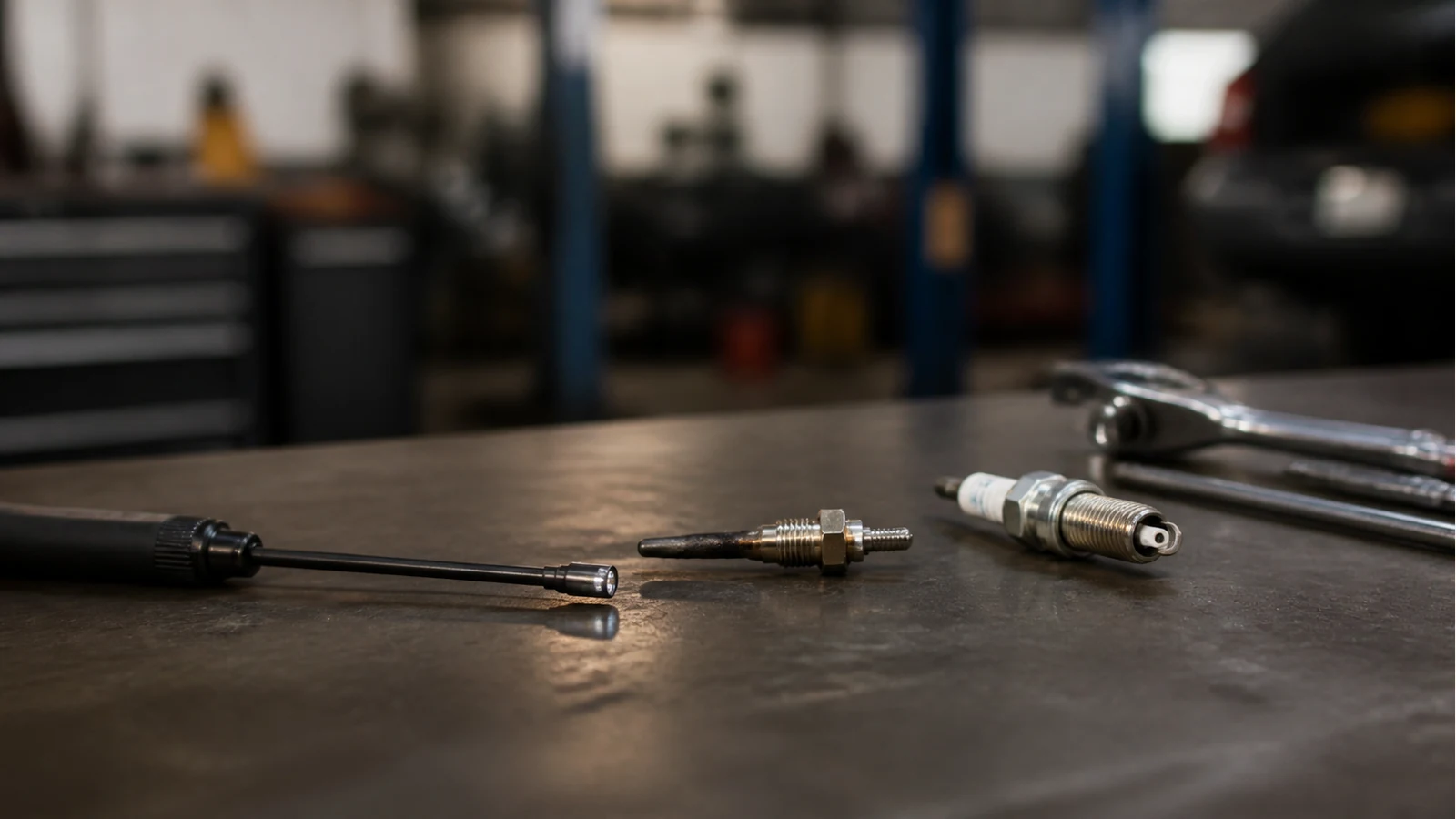
For a mechanic, the tempting shortcut is to ask whether the camera is good enough for diesel cylinders. The better first question is simpler: can the tip enter without forcing it? A UK listing for a diesel engine borescope describes a tiny probe intended for glow-plug holes and lists a 3.9mm camera with a 4.5mm diameter, which is a useful warning sign for anyone assuming 6mm is universal. See the Rapid Electronics Sealey diesel borescope listing.
Spark-plug inspections often use probes around 3.9-6 mm. A 6 mm probe suits many petrol spark-plug checks and some larger openings. Measure the glow-plug hole on a diesel before you rely on that diameter. The practical reading is: 6mm can be realistic for many petrol spark-plug inspections and some larger access routes, while diesel-only glow-plug work deserves a measurement first. The broader range is covered in this automotive borescope probe-size guidance.
Petrol spark plug, diesel glow plug, or injector port?
| Access route | What to check first | What the camera can help with | When to step down |
|---|---|---|---|
| Petrol spark-plug hole | Plug thread size, angle and room around the well | Piston crown, bore-wall hints, carbon and oil residue | If the well is unusually narrow or the tip cannot pass cleanly |
| Diesel glow-plug hole | Actual aperture after safe plug removal | Cylinder view only if the probe clears the opening | If your measured opening is below the camera tip diameter |
| Injector port | Access procedure, sealing risk and manufacturer method | Useful on some engines when the plug is already coming out for the job | If removal risks damage, coding, sealing or warranty issues |
Where articulation still matters
Articulation does not shrink the probe. It only becomes valuable after the camera is inside the chamber. Once there, a steerable tip can help you look back towards cylinder walls, piston crown edges and valve areas instead of only seeing straight ahead. Recent engine-inspection guidance also treats the access point as the first constraint and notes that diesel glow-plug holes are usually tighter than petrol spark-plug access; see this engine inspection access-point guide.
Who should not buy a 6mm kit for this job?
If your work is mainly diesel glow-plug inspection and you have not measured the opening, a 6mm phone borescope is a risky blind buy. If the removed glow plug suggests a tight sub-5mm path, look for a specialist thinner diesel probe instead. If your work is mixed petrol diagnostics, general engine-bay inspection, HVAC and occasional plumbing, a 6mm articulating kit may still make sense after access is confirmed.
Next step
Measure the access route, then choose the cable length for the bay reach. If the opening genuinely clears a 6mm tip and you want a phone-connected articulating option for mixed garage jobs, the 6mm articulating endoscope product page is relevant. If your measured route is tighter, buy the thinner diesel-specific tool instead.
For reach planning after the diameter decision, use the guide to choose the right cable length after measuring access.